A pump sprayer is one of the simplest tools in a shed and one of the most frequently replaced, almost always for a reason that could have been avoided. Sprayers do not usually break; they clog, they leak at a dried-out seal, or they seize because something was left in the tank over winter. All three are maintenance problems rather than quality problems.
How the thing actually works
A hand-pump sprayer pressurises air above the liquid in a sealed tank. Squeezing the trigger opens a valve, and pressure pushes liquid up a dip tube, through a filter, along a hose, through the wand and out of a nozzle. Every one of those components is a place a blockage can sit, and the filter and the nozzle account for the overwhelming majority.
The three-rinse rule
The single habit that keeps a sprayer alive is rinsing three times immediately after use — not later, not tomorrow. Fill with clean water, pressurise, spray through the wand until it runs clear, empty, and repeat. Spraying the rinse water through matters: emptying the tank alone leaves product sitting in the hose and nozzle where it dries.
Dried product is what glues a nozzle shut. Wet product does no harm at all.
Filters and nozzles
Most sprayers have two filters: one at the base of the dip tube inside the tank, and one in the trigger handle. Both unscrew, and both are usually forgotten until flow drops. Rinse them under a tap, and use a soft brush rather than a pin — pushing a pin through a nozzle orifice enlarges it and changes the spray pattern permanently.
If flow is weak but pressure is good, suspect a filter. If pressure will not build at all, suspect a seal.
Seals and lubrication
The pump plunger runs on an O-ring or a cup seal that needs to stay supple. Left dry through a winter it shrinks and hardens, and the first pump of the spring produces no pressure. A smear of silicone grease on the plunger seal once a season is the whole job.
Do not use petroleum-based grease on rubber seals; it degrades them. Silicone is the correct product and a small tube lasts years.
Pressure release before you open it
Always release pressure with the relief valve before unscrewing the pump. Opening a pressurised tank sprays whatever is inside at your face, and if that is a herbicide concentrate it is a genuinely serious accident rather than an inconvenience.
One sprayer per job
Keep separate sprayers for herbicide and for anything else — foliar feed, insecticide, plain water. Residue in a tank is the most common cause of mysterious lawn damage weeks after a treatment, and no amount of rinsing is fully trusted by anyone who has had it happen. Marking the tanks with tape or a paint pen is enough.
Storage
- Store empty, dry and with the pump handle unlocked so the seal is not compressed.
- Leave the lid loose so the tank can breathe and does not hold damp.
- Keep out of direct sun — UV makes tanks brittle and cloudy over a couple of seasons.
- Store above freezing where possible; water left in a hose can split it.
Quick fault-finding
No pressure builds: pump seal dry or damaged; lid seal not seated; tank cracked.
Pressure builds but nothing sprays: blocked nozzle, blocked handle filter, or a kinked hose.
Sprays intermittently: partially blocked filter, or the dip tube is not reaching the liquid because the tank is nearly empty.
Leaks at the handle: trigger valve seal, usually replaceable and usually cheap.
Uneven fan pattern: nozzle worn or damaged, often from having been cleared with something metal.
Assembly on arrival
Sprayers ship in the manufacturer’s box and generally need the hose and wand fitting — a two-minute job with no tools. Hand-tighten fittings; over-tightening plastic threads is a good way to crack a fitting that was fine. Do a clean-water test before mixing anything, so you find a loose fitting with water rather than with concentrate.
Tank capacities and hose lengths are listed on each product page in spreaders and sprayers.
Choosing a tank size
Tank size is a trade-off between refills and weight. Water weighs a little over eight pounds a gallon, so a full two-gallon sprayer is around eighteen pounds before you add the tank itself. That is manageable for a border and unpleasant across a large lawn.
For spot treatment and beds, one gallon is usually the right answer. For anything approaching whole-lawn coverage, a backpack or a hose-end applicator will be less painful than repeatedly refilling a hand sprayer, and the consistency of application will be better because you are not stopping every few minutes.
Nozzles and spray patterns
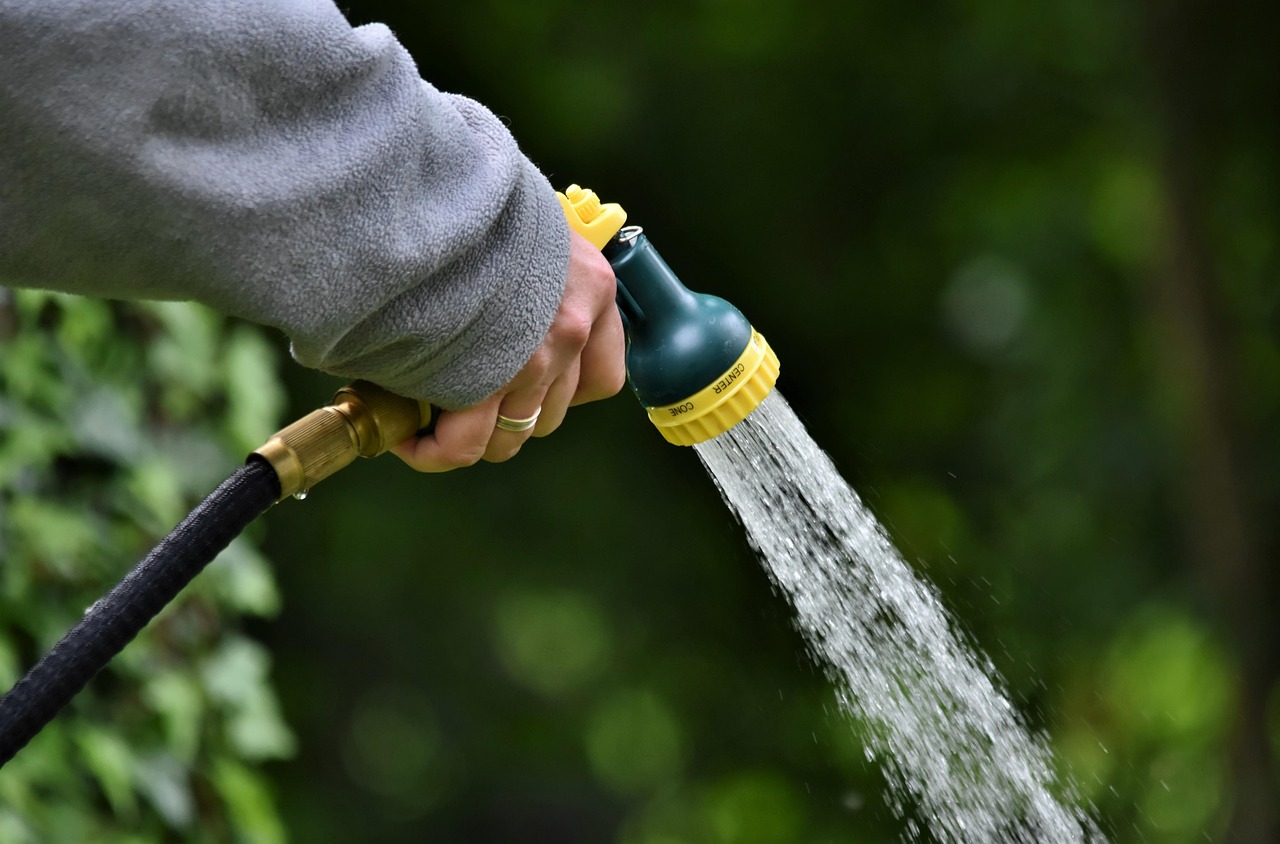
Most sprayers ship with an adjustable cone nozzle that runs from a narrow jet to a wide mist. For weed control, the useful setting is the coarsest one that still gives even coverage. Fine mist drifts, and drift is what kills the plants you wanted to keep.
Some models accept flat-fan tips, which give a much more even band and are worth fitting if you treat larger areas regularly. Whatever tip is fitted, check the pattern against a dry path before you start: an uneven fan means a worn or partially blocked tip, and it will show up as stripes of surviving weeds a fortnight later.