Weed control products fail for one of two reasons: the wrong type for the job, or the right type applied at the wrong time. Both are avoidable, and both are answered on the label. The label is a legal document as well as an instruction sheet, and everything that follows is on it — usually in the first few lines.
Selective versus non-selective
Selective products are formulated to damage certain plant families and leave others alone. A broadleaf selective will take out clover, dandelion and chickweed while leaving a grass lawn standing. That selectivity is the whole product, and it is also its limit: a selective broadleaf product will do nothing to a grassy weed.
Non-selective products kill essentially any green plant they land on. They are the right choice for a driveway, a gravel path, a fence line or clearing a bed before replanting, and completely wrong for anything you want to keep. Overspray and drift are the danger, and on a windy day the drift can be several feet.
If a label does not say which it is, look at the directions: a product that describes application to a lawn is selective; one that warns about contact with desirable plants is not.
Pre-emergent versus post-emergent
Pre-emergent works on seed, not plants. It forms a chemical barrier in the top layer of soil that stops germinating seedlings developing. It has no effect on a weed you can already see, and applying it late is simply money spent for nothing.
Post-emergent works on plants that are already growing, and generally works best on young, actively growing weeds. A large, hardened, drought-stressed weed in August absorbs very little.
The two are complements, not alternatives. Pre-emergent in the right window dramatically reduces how much post-emergent you need later in the year.
Concentrate versus ready-to-use
Concentrate is diluted by you into a sprayer; ready-to-use arrives at working strength. Concentrate is cheaper per treated area and demands accuracy — the mixing rate on the label is a ratio, usually per gallon, and doubling it does not double the effect but does increase the damage.
Ready-to-use is convenient for spot treatment and expensive for anything large. As a rule, if you are treating more than a small patch it is worth mixing.
The numbers that matter on the label
- Application rate: how much per area or per gallon. This is not a suggestion.
- Rainfast time: how long the product needs before rain will not wash it off.
- Temperature limits: many products state a maximum temperature; applying above it risks burning the lawn.
- Re-entry interval: how long before people and animals should return to the area.
- Re-treatment interval: the minimum gap before a second application.
- Grass types: some selectives damage St. Augustine or centipede grass specifically. Check yours is listed as tolerant.
Pet-safe is a specific claim
Where a product is described as pet-safe, that description belongs to the manufacturer and normally refers to the state of the treated area once it is dry, not to the concentrate in the bottle. The re-entry interval on the label is the number to follow. We repeat the manufacturer’s wording on our product pages rather than upgrading it, because “pet-safe” and “safe to drink” are not the same sentence.
Practical spraying
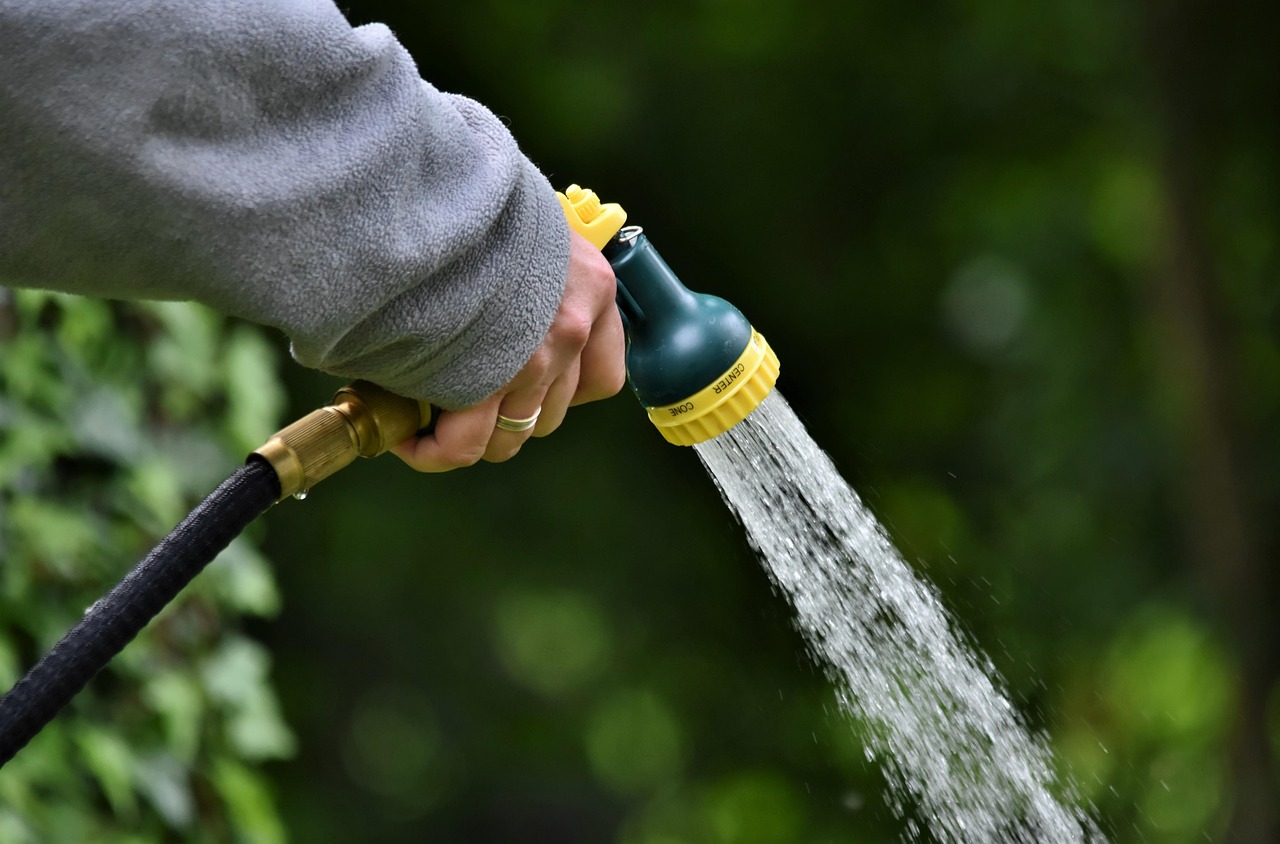
Spray on a still day, early or late rather than in the middle of the afternoon. Use a coarse droplet setting — fine mist drifts. Mark treated areas mentally or with a marker dye if the product includes one, because untreated strips are the usual cause of a patchy result.
Rinse the sprayer immediately afterwards, three times, and never use the same sprayer for a non-selective product and anything else. Residue in a tank has killed a lot of lawns.
Storage and disposal
Keep concentrates in the original container with the label intact, somewhere frost-free, locked away from children and animals. Do not decant into a drink bottle — the reason that warning exists is that people do it. Dispose of unused diluted product according to the label rather than down a drain.
Our weed and grass control listings state concentrate or ready-to-use in the title, and the manufacturer’s own label is the authority on rates and intervals.
Mixing accurately
Concentrate rates are given per gallon of water, so the first thing to know is how much your sprayer actually holds when filled to a sensible working level — not its nominal capacity. A one-gallon sprayer is rarely filled to a full gallon, and if you mix for a gallon and only spray three-quarters of one, the mix is stronger than the label intends.
Measure with a dedicated measuring cup that never goes near a kitchen, add water first and concentrate second, and swirl rather than shake. Adding concentrate to an empty tank and then filling causes foaming and leaves undissolved product at the bottom.
Recording what you did
Write down the date, the product, the rate and the area treated. It sounds excessive for a domestic lawn and it answers almost every question that comes up later: why one area recovered and another did not, whether the re-treatment interval has passed, and whether that patch of damage lines up with a spray day or with a hot spell.
A note on a phone is enough. It also matters if you sell or let the property, since some products carry restrictions on replanting intervals that a new occupier would have no way of knowing about.